Is a Sushi Class in Tokyo Worth It? An Honest Look

Is a sushi class in Tokyo worth it, or are you better off just booking a table at a good sushi restaurant instead? For most travelers, yes, conditionally. Tokyo sushi classes on this site run $45 to $119 (about ¥7,100 to ¥18,700 at roughly ¥157 to the dollar, August 2026), and for that you spend 90 minutes to three hours shaping rice and fish with your own hands rather than watching someone else do it. That is a real, specific skill you take home, not a vague memory. It is not, though, the same experience as an omakase dinner, and the two get confused constantly. Below is the real math: class cost against omakase cost, what two hours at the counter actually buys, and who should skip the class entirely.

Quick answer
Yes, if you want to learn technique and take home a skill: Tokyo sushi classes run $45-$119 for 90 minutes to three hours of hands-on nigiri, maki, or temaki instruction, ending in a meal you shaped yourself. Skip it if you only want to eat well, since the same money buys most of an omakase dinner at counters like Manten Sushi.
Key takeaways
- Classes run $45-$119 (about ¥7,100-¥18,700 at ~¥157/$, August 2026); airKitchen puts the citywide average around ¥6,890
- The single best reason to go: you leave knowing how sushi rice is actually seasoned and shaped, not just how it tastes
- The honest downside: in 90-100 minutes you shape roughly 5-8 pieces, nowhere near a 20-course tasting
- Skip it if you are chasing a top-tier eating experience; that money goes further at an omakase counter
- Best booked 2-3 weeks ahead; most classes here offer free cancellation up to 24 hours before
The Verdict, Conditions Attached
A sushi class in Tokyo earns its price when you go in wanting to learn, not just to eat. Here is the honest breakdown, worth it and skip it, in equal weight:
- Worth it if: you want to understand how sushi rice is actually seasoned and shaped, not just taste the result
- Worth it if: you are traveling with a partner or small group and want a shared activity that ends in a meal, not just a reservation
- Worth it if: your budget for this part of the trip tops out around $60-$70, since the class range already covers that whole tier
- Skip it if: your priority is eating the best fish in Tokyo, not shaping it yourself; that money is better spent at an omakase counter
- Skip it if: you cannot eat raw or lightly cured fish, since most classes cannot substitute the core ingredient
- Skip it if: you have one evening in Tokyo and a reservation at a serious sushi restaurant already booked, since squeezing in a class the same day means rushing both
Class Money vs Omakase Money: The Real Math
Here is what the same rough budget buys on each side of the counter, from a beginner class to a two-Michelin-star tasting menu:
| Experience | What you pay | What you take away |
|---|---|---|
| Shibuya hand-roll class | $45 (~¥7,100) | A full temaki feast you rolled yourself, plus miso soup and green tea |
| Asakusa nigiri and maki class | $57 (~¥8,900) | 100 minutes of hands-on technique and everything you made to eat |
| Private Ginza Edomae lesson | $119 (~¥18,700) | A reserved counter with a master chef, a sit-down lunch, a certificate, and a souvenir |
| Affordable Ginza omakase (Manten Sushi) | from ¥8,800 (~$56) | 25-26 courses shaped and served by a professional, zero hands-on learning |
| Top-tier Ginza omakase (Sushi Yoshitake) | around ¥40,000 (~$255) | A two-Michelin-star tasting menu, technique on display but never taught |
Line these up and the pattern is obvious. The entire class range on this site, $45 to $119, fits inside the gap between an affordable Manten Sushi seat and one Sushi Yoshitake dinner. A class never buys you Yoshitake-grade fish, and an omakase dinner never teaches you to press rice.
They are not competing purchases, they are answering different questions, and most travelers can honestly afford one of each on a longer Tokyo trip.
Two Hours at the Counter: Where the Fee Goes
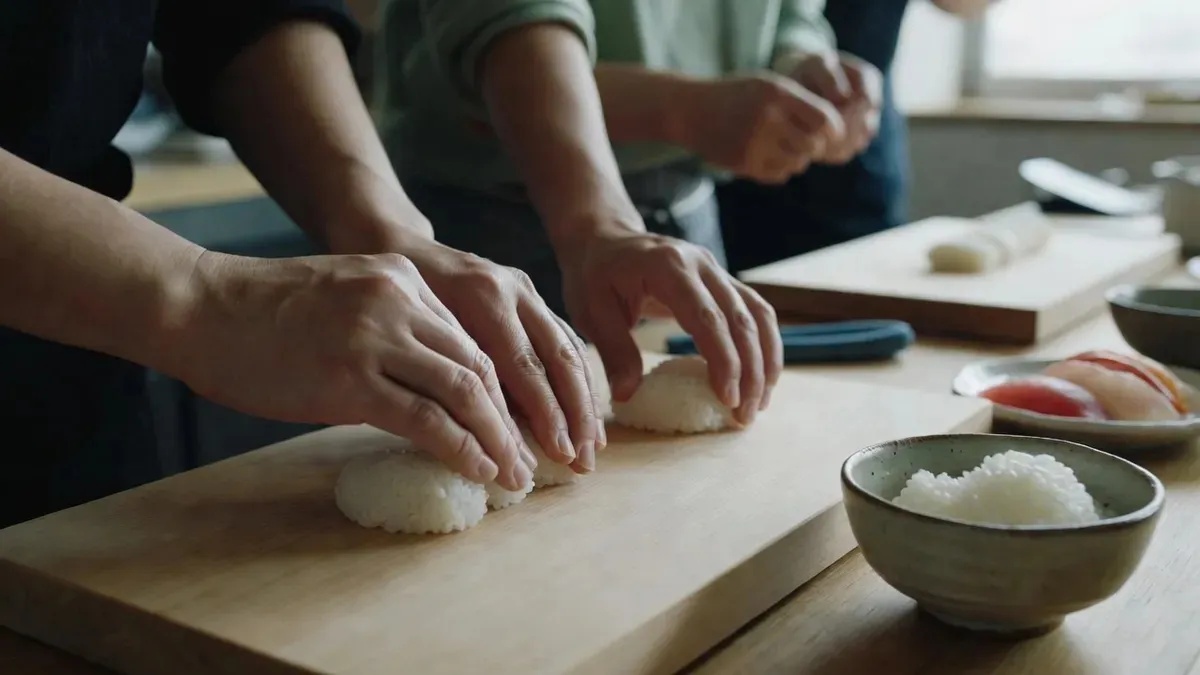
A typical class runs like this, using the 100-minute Asakusa session as the baseline most people book first. We start with a short, friendly quiz on sushi history and etiquette, the kind of five minutes that makes the room feel less like a demo and more like a class. Then rice: we learn how vinegared shari is seasoned, and why the temperature and hand pressure matter more than any recipe card ever could. Nigiri comes next, shaping tuna and salmon over rice by feel until it holds together without being packed too tight. If the format includes maki, we move to rolling, keeping the nori taut and the fillings centered.
At the three-hour Shinjuku format the sequence stretches to four sushi styles plus a rolled omelette (tamagoyaki) and miso soup, roughly the price of one mid-range omakase dinner ($65, about ¥10,200) for nearly double the instruction time. At the Tsukiji class the sequence changes shape entirely: before anyone touches rice, a professional sushi master runs a live fish-cutting show with a traditional yanagiba knife, so the first stretch of the session is demonstration, not practice, and that market setting is part of what the $69 fee buys. At the private Ginza lesson the pace slows further still, since one chef guides one small group through the same Edomae sequence with nobody else waiting a turn at the counter, which is most of what separates a $119 fee from a $57 one.
Whatever the format, the class ends the same way everywhere: you sit down and eat what you made, with instructors correcting technique in real time as you go rather than after the fact. Nobody leaves hungry, and nobody leaves able to butcher a whole tuna, and that gap is the honest scope of what two hours actually buys.
| Format | Length | Structure |
|---|---|---|
| Asakusa (the baseline above) | 100 minutes | History quiz, rice seasoning, nigiri, maki, sit-down tasting |
| 3-hour Shinjuku course | 3 hours | Rice, four sushi styles plus tamagoyaki, miso soup, tasting |
| Tsukiji market class | 1.5-4 hours | Live fish-cutting demonstration, nigiri, market-sourced tasting |
| Private Ginza lesson | 1.5 hours | One-on-one Edomae sequence, sit-down lunch, certificate |
Where These Classes Fall Short
This is the part most booking pages skip, so here is the honest list:
- You shape roughly 5-8 pieces in a 90-100 minute session, nowhere near a 20-course tasting menu. That is fine if you came to learn technique, not to eat a full meal's worth of premium fish
- Budget and mid-tier classes use standard-grade tuna and salmon, not the aged Edomae fish a ¥30,000-plus counter serves. The fish is genuinely fresh and safe, it simply is not the graded, cured product a specialist buys at Toyosu
- Group classes run in fixed English-language time slots, so one-on-one correction thins out once the room fills past six or eight people. The smaller-cap Shinjuku format, capped at nine, or the private Ginza lesson solves this directly
- Ninety minutes is not enough to master knife work; you shape and press, you rarely cut. Anyone chasing real fish-butchery skill should watch the Tsukiji class's fish-cutting demonstration rather than expect to hold the knife themselves
- Most venues do not sell wine or sake alongside the meal, and the Shibuya class explicitly does not allow outside alcohol. If a drink is part of the experience you want, check the venue's own menu before booking
Two groups of travelers should read this section twice before booking anything. Serious home cooks who want an actual knife course, boning, filleting, the shari-kiri cut used to portion rice, will find every class here teaches shaping and pressing, not cutting; the Tsukiji class gets closest with its live demonstration, but you still watch rather than hold the blade. And picky eaters who are not comfortable around raw or lightly cured fish should skip the category outright rather than hope a class will change their mind mid-session; most operators cannot swap the core ingredient, and a 90-minute room is not the place to discover you do not like nigiri.
Make It or Just Eat It?
Picking the Right One Without Overspending
Most of these classes fill up two to three weeks ahead through most of the year. During cherry blossom season (late March to mid-April) and Golden Week (April 29 to May 5), push that to four to six weeks. Free cancellation up to 24 hours before covers the far more common risk anyway, a changed flight or a jet-lagged morning, so book the format you actually want rather than the first slot that shows availability.
Match the format to your reason for going. First-timers who want the broadest technique for the least money should look at the 100-minute Asakusa session, still the most-reviewed option on this site. Anyone counting every yen should look at the ¥7,100 temaki session in Shibuya, the cheapest class here and still a 5.0-rated one.
The Asakusa session carries the deepest track record of any format on this page, 2,153 reviews at a 4.9 average, which is the kind of sample size that makes a first-timer's decision easy. If the whole point is the occasion rather than the price, the private Ginza counter with a master chef is the closest a class gets to the omakase experience, minus the tasting-menu fish grade. Our full review of that session, the Edomae lesson at a reserved Ginza counter, covers exactly what the certificate and souvenir add.
For the exact price of every format side by side, see the full 2026 price breakdown, and for the menu you will actually leave with, see what actually ends up on your board.
One more honest note before you book. As an independent guide we do not sell tours or take a booking fee on top of the listed price, so nothing here changes whether you pick the $45 class or the $119 one. What we do watch for is the inclusions line: a $57 class that already includes the meal, the ingredients, and an English-speaking instructor is a complete price, while a cheaper-looking listing elsewhere that adds a facility fee at checkout is not actually cheaper once you compare totals.
Read the fine print on any operator's own booking page the same way you would read a restaurant's set-menu terms before assuming the headline number is the full one.
Frequently Asked Questions
How much does a sushi class in Tokyo cost?
$45 to $119 per person depending on format and location, about ¥7,100 to ¥18,700 at roughly ¥157 to the dollar. See the full 2026 price breakdown for every class side by side.
Do you need experience to take a sushi class in Tokyo?
No. Every class on this site is built for complete beginners; instructors expect you to know nothing about knife work or rice seasoning going in.
How long does a sushi class in Tokyo take?
Most run 90 to 100 minutes. The Shinjuku format runs a full three hours and covers four sushi styles plus tamagoyaki.
Can I join a Tokyo sushi class alone?
Yes. Group classes seat solo travelers alongside other small groups with no surcharge, and the shared-counter format works well on a solo trip.
Do you eat what you make in a Tokyo sushi class?
Yes, at every class in this guide you sit down and eat everything you shaped, usually with miso soup on the side.
How far in advance should I book a sushi class in Tokyo?
Two to three weeks for most of the year, four to six weeks during cherry blossom season or Golden Week. Free cancellation up to 24 hours before covers the more common risk of a changed schedule.
There is no wrong answer here, only a mismatched one. A sushi class buys you a skill and a story, not a Michelin-grade meal, and the moment you stop comparing it to an omakase dinner the value becomes obvious. If you have already decided the hands-on version is worth it, compare Tokyo's hands-on sushi experiences side by side before you book, or keep reading for the menu you'll actually shape once class starts.